Unnao rape case: Delhi HC suspends jail term of Kuldeep Sengar; sets condition for bail
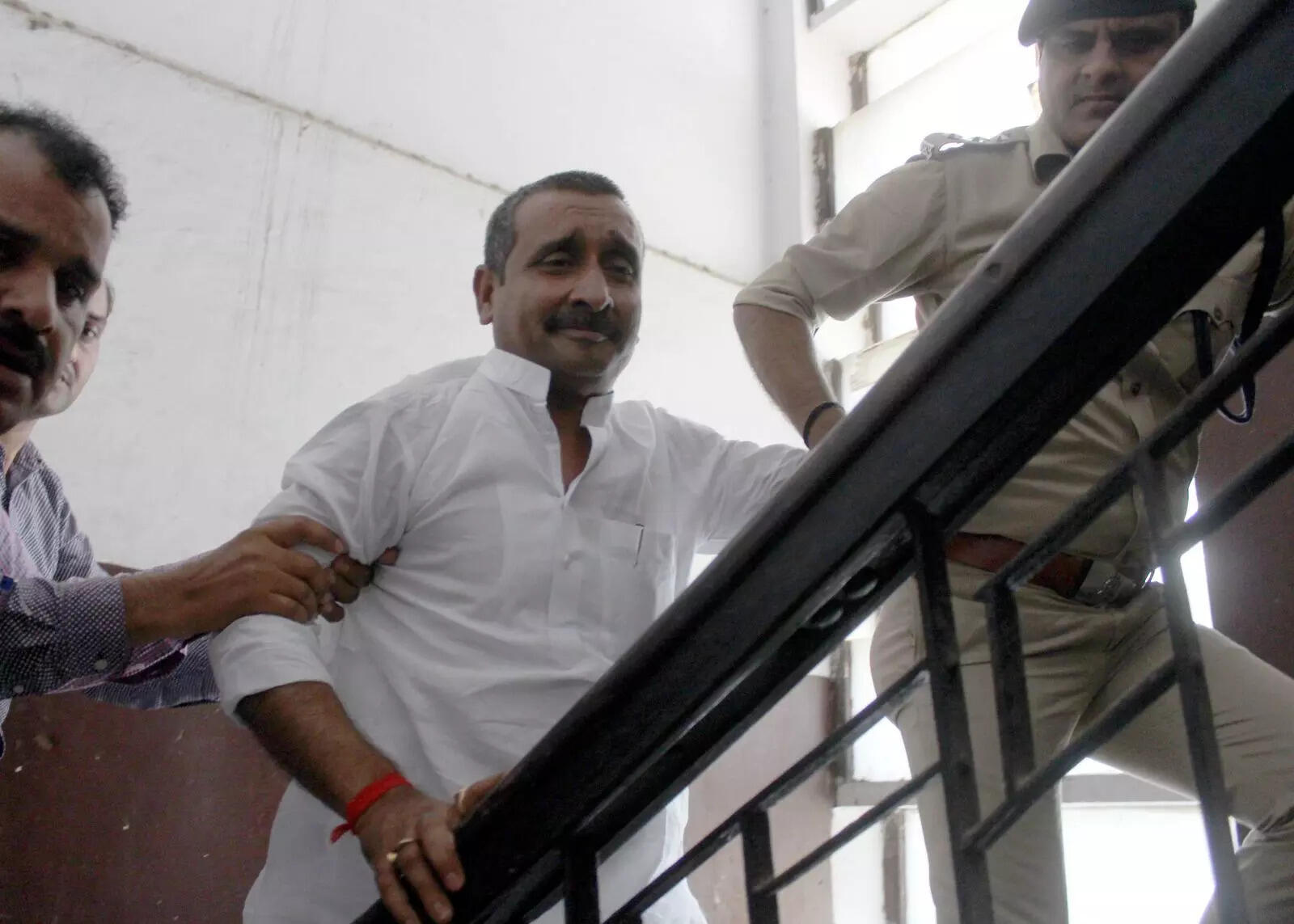
Unnao rape case: Delhi HC suspends jail term of Kuldeep Sengar; sets condition for bail
The **Unnao rape case**, one of India's most shocking and politically charged incidents, has taken a dramatic turn. On December 23, 2025, the Delhi High Court suspended the life imprisonment sentence of former BJP MLA **Kuldeep Singh Sengar**, granting him conditional bail after more than six years behind bars. This decision by a division bench comprising Justice Subramonium Prasad and Justice Harish Vaidyanathan has reignited national debate on justice, political influence, and victim rights in high-profile cases.
Background of the Unnao Rape Case: A Timeline of Tragedy
The saga began on **June 4, 2017**, when a 17-year-old girl visited the residence of then-BJP MLA Kuldeep Singh Sengar in Unnao, Uttar Pradesh, seeking a job. She alleged that Sengar raped her at his home. This incident, detailed extensively in court records and media reports, marked the start of a harrowing ordeal for the victim and her family.
Between **June 11 and 20, 2017**, the survivor was abducted by three men—Subham Singh, Brijesh Yadav, and Awadh Narayan—from Makhi village. She claimed they sedated her and subjected her to gang rape over several days. On **June 20, 2017**, the survivor and her father filed an FIR against Sengar, Yadav, and Narayan under IPC sections 363, 366, 376, and 506, covering kidnapping, abduction, rape, and criminal intimidation.
Delays in medical examination forced the survivor to relocate to Delhi on **June 22, 2017**, to stay with relatives. The case gained momentum only after public outrage, including the victim's attempt to self-immolate outside Uttar Pradesh Chief Minister Yogi Adityanath's office. A chargesheet was filed a year later by the Central Bureau of Investigation (CBI) on **July 11, 2018**, accusing Sengar of the rape. Two days later, another chargesheet implicated Sengar's brother, three policemen, and five others in framing the victim's father.
The victim's father was arrested on false charges, and on **April 9, 2019**, he died in hospital from injuries sustained in judicial custody. This led to the arrest of Atul Sengar (Kuldeep's brother) and the suspension of six police officers. Widespread protests prompted the Uttar Pradesh government to transfer the case to the CBI, which was later moved to the Allahabad High Court.
Supreme Court Steps In: Transfer to Delhi and Compensation
The turning point came in **July 2019**. On **July 29, 2019**, an FIR was registered against Sengar and nine others for a road accident involving the survivor. Her letter to the Chief Justice of India (CJI) went public on **July 30, 2019**, prompting the Supreme Court to take suo motu cognizance on **July 31, 2019**.
On **August 1, 2019**, the Supreme Court ordered the transfer of all five related cases to Delhi's Tis Hazari Court in the West District. It directed protection for the victim's family, her lawyer, and his family, and awarded her **₹25 lakhs** in interim compensation from the Uttar Pradesh government. Day-to-day hearings began on **August 5, 2019**, with the survivor receiving treatment at AIIMS Delhi.
Conviction and Life Sentence: Justice Served?
After a swift trial, Sengar was convicted of rape on **December 16, 2019**. On **December 20, 2019**, a Delhi court sentenced him to **life imprisonment** and imposed a fine of **₹25 lakh** (equivalent to about ₹31 lakh or US$37,000 in 2023). Of this, ₹15 lakhs was allocated to the state for trial expenses. In **March 2020**, he was also found guilty of culpable homicide and criminal conspiracy in the death of the victim's father.
Tragedy continued: On **December 1, 2020**, the survivor's lawyer, Mahendra Singh, died from injuries in a related road accident. These events underscored the case's profound impact, shaking public faith in the justice system and highlighting alleged political interference.
Delhi High Court's Landmark Decision on Bail
Fast-forward to **December 23, 2025**: In a surprising development, the Delhi High Court division bench suspended Sengar's sentence. The court required him to furnish a **personal bond of ₹15 lakh** with three sureties of the same amount. This conditional bail allows Sengar to walk free pending appeal, marking a pivotal shift after years of incarceration.
Legal experts note that such suspensions are not uncommon in appeals against life sentences, especially if meritorious grounds exist. However, given the case's sensitivity, the decision has sparked criticism from activists who fear it undermines victim justice. The bench's order emphasizes compliance with conditions, including regular reporting, to prevent absconding.
Key Legal and Social Implications
This ruling raises critical questions about **bail in heinous crime appeals**. Under Indian law, life convicts can seek suspension of sentence under Section 389 of the CrPC if the appeal is likely to succeed or if undue hardship is shown. The High Court's conditions aim to balance rehabilitation with public safety.
Socially, the Unnao case exposed systemic failures: delayed FIRs, custodial deaths, and threats to victims. It catalyzed #MeToo-like movements in India, pushing for faster trials and witness protection. The Supreme Court's 2019 intervention set a precedent for high-profile transfers, ensuring impartiality.
Victim's Journey and Ongoing Fight
The survivor endured abduction, gang rape allegations, a near-fatal accident, and the loss of her father and lawyer. Her resilience, amplified by public and judicial support, led to Sengar's conviction. Yet, with his bail, concerns linger about her safety despite earlier protections.
Statistics from similar cases show low conviction rates in rape trials (around 27% per NCRB data), making Unnao a rare win—until now. Advocates urge the Supreme Court to monitor developments closely.
Political Ramifications for BJP and Beyond
Sengar, once a powerful BJP MLA, was expelled post-FIR. The case embarrassed the party, leading to his 2019 ticket denial. His bail revives scrutiny on political accountability, with opposition parties decrying "soft-pedaling" on crimes by influential figures.
Yet, the court stressed the decision's basis on legal merits, not politics. As appeals proceed, all eyes are on whether Sengar's conviction holds or if new evidence emerges.
Broader Lessons for India's Justice System
- Swift Trials: Supreme Court-mandated 45-day timelines expedited proceedings.
- Victim Compensation: ₹25 lakhs interim aid sets a model for state liability.
- Witness Protection: Essential in politically charged cases.
- Bail Conditions: Stringent sureties prevent misuse.
The Unnao case remains a litmus test for judicial independence amid power dynamics.
Buy Now: Related Legal Resources
Stay informed on high-profile cases and Indian law with this comprehensive guide to criminal justice reforms. Buy Now for in-depth analysis and updates.
What's Next in the Unnao Rape Case?
Sengar's appeal hearing will determine if the suspension becomes permanent acquittal or reinstatement of sentence. The survivor may challenge the bail, citing risks. Public sentiment, fueled by timelines of injustice, demands closure.
This development, over eight years after the rape, underscores the protracted nature of justice in India. It serves as a reminder: accountability must transcend influence.
(Word count: 912)


Comments
Post a Comment