India closer to $450m BrahMos pacts with Vietnam, Indonesia
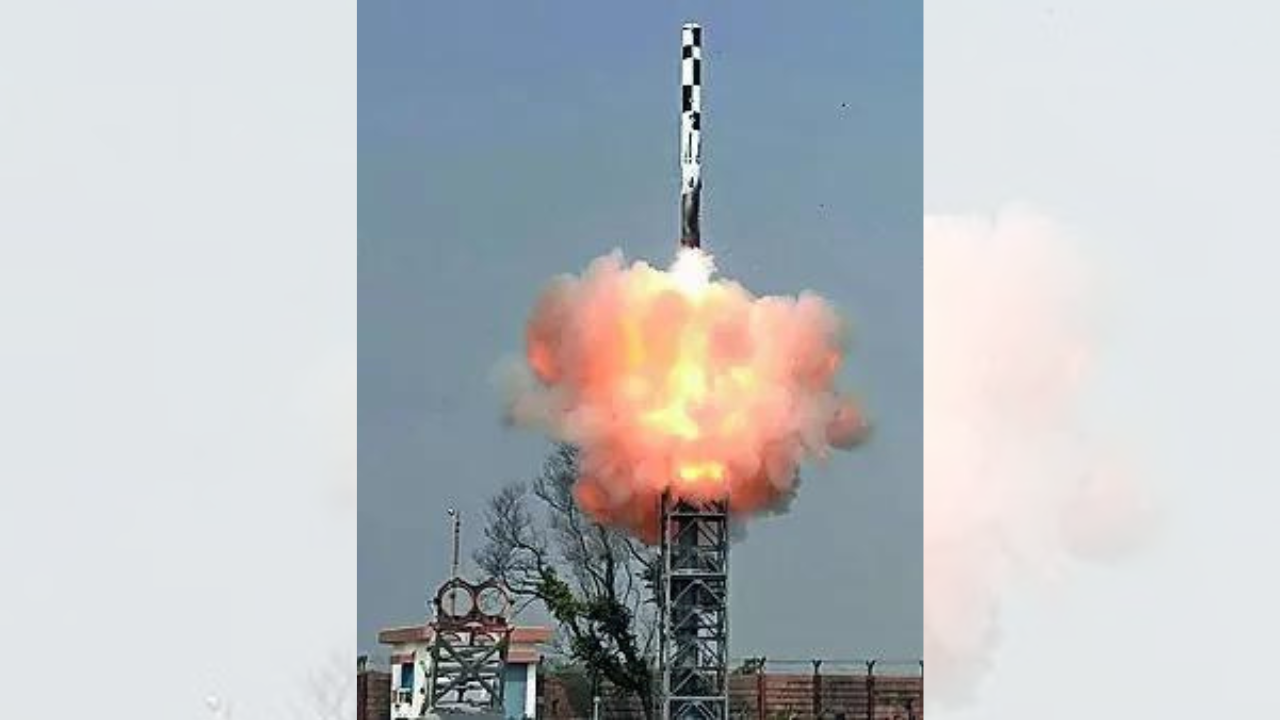
India closer to $450m BrahMos pacts with Vietnam, Indonesia
India is advancing toward securing landmark defense deals worth approximately $450 million for its indigenous BrahMos supersonic cruise missile with Vietnam and Indonesia, signaling a strategic boost to regional security partnerships in Southeast Asia. These pacts underscore the growing global demand for BrahMos, recognized as one of the world's fastest cruise missiles, capable of speeds up to Mach 3 and versatile deployment across land, sea, air, and submarine platforms.[1][2][3]
What is the BrahMos Missile?
The **BrahMos missile** is a ramjet-powered supersonic cruise missile jointly developed by India's DRDO and Russia's NPOM, named after the Brahmaputra and Moskva rivers. It represents a pinnacle of modern missile technology, traveling at speeds of Mach 2.8 to 3.0—approximately 3,700 km/h—making it exceptionally difficult for enemy defenses to intercept.[1][3][4] With a "fire and forget" capability, the launcher can disengage immediately after launch, enhancing operational safety.[1]
BrahMos features advanced stealth technology, including a low radar cross-section and sea-skimming flight paths as low as 10 meters above sea level. Its guidance system combines inertial navigation with active radar seekers and GPS/GLONASS/NavIC for pinpoint accuracy, achieving a circular error probable (CEP) of just 1 meter. This precision enables surgical strikes on high-value targets with minimal collateral damage.[1][2][5]
Technical Specifications of BrahMos
The missile's core specs highlight its superiority:
- Speed: Mach 2.8–3.0 (up to 3,700 km/h)[1][4]
- Range: 290 km (standard export), up to 650–800 km (upgraded variants post-MTCR)[1][2][4]
- Warhead: 200–300 kg conventional high-explosive or submunitions[1][2][3]
- Length: 8.0–8.2 m; Diameter: 0.67 m; Launch Weight: 2,200–3,000 kg[2]
- Propulsion: Solid-propellant booster + liquid-fueled ramjet[2][3]
- Altitude: 10 m (terminal) to 15,000 m (cruise)[1][4]
- Guidance: Inertial + GPS/GLONASS/NavIC + active/passive radar[2][5]
These attributes give BrahMos over 32 times the kinetic energy of subsonic missiles like the Tomahawk, even with a smaller payload, allowing it to penetrate hardened targets through sheer impact force alone.[3][5]
Versatile Launch Platforms
One of BrahMos's standout features is its multi-platform adaptability, deployable from:
- Land: Mobile autonomous launchers (MAL), ideal for border defense along challenging terrains like Arunachal Pradesh.[1][3]
- Sea: Ships, vertical launch systems, and submerged submarines for anti-ship and land-attack roles.[2][3]
- Air: Sukhoi Su-30MKI (up to three missiles), MiG-29K, HAL Tejas, and future Rafale integrations.[3][4]
- Submarine: Proven from submerged barges, enhancing second-strike capabilities.[2][4]
This flexibility bolsters India's strategic posture, particularly along the LAC and in the Indian Ocean Region, while making it attractive for export partners like Vietnam and Indonesia facing maritime threats.[1][6]
BrahMos Variants and Upgrades
BrahMos has evolved through several blocks:
- Block I/II/III: Land-attack with steep-dive for mountains; Block III operational in Arunachal.[3][4]
- BrahMos-NG: Next-generation lighter version for more aircraft, maintaining Mach 3.5 speed and 290 km range; tests expected late 2025.[4][5]
- Air-Launched (BrahMos-A): 300 kg warhead for deep strikes from Su-30MKI.[3]
- Submarine-Launched: For P75I class subs.[3][4]
- BrahMos-II: Hypersonic scramjet variant targeting Mach 7+ speeds, under joint India-Russia development.[2][4]
Recent tests extended range to 800+ km after MTCR entry, transforming regional dynamics.[1][4][5]
Strategic Importance of BrahMos Exports
India's push for $450 million BrahMos deals with Vietnam and Indonesia reflects deepening defense ties amid South China Sea tensions. Vietnam seeks coastal defense enhancements, while Indonesia aims to bolster archipelagic security. These sales position India as a reliable defense exporter, with BrahMos already operational in the Philippines.[4][6]
The missile's 99.99% strike accuracy, high-speed penetration, and unpredictable trajectory make it a game-changer against adversaries. Compared to rivals:
| Feature | BrahMos | Tomahawk (USA) | Kalibr (Russia) |
|---|---|---|---|
| Speed | Mach 2.8–3.0 | Subsonic (0.75 Mach) | Subsonic/Supersonic |
| Range | 450–800 km | 1,600+ km | 1,500+ km |
| Platforms | Land/Sea/Air/Sub | Land/Sea/Sub | Land/Sea/Sub |
BrahMos excels in speed and multi-platform use, ideal for rapid response.[4]
Recent Developments and Future Prospects
Extended-range tests in 2023 hit 800+ km, with integrations on INS Visakhapatnam and HAL Tejas. The G30OM chip enables triple-redundant navigation for GPS-denied environments, ensuring <10m accuracy.[5] Deployments strengthen India's borders and project power in the IOR.[1][6]
These pacts not only generate revenue for BrahMos Aerospace but also foster technology transfers, enhancing partners' capabilities while countering regional imbalances.
Buy Now: Enhance Your Defense Knowledge
Interested in scaling models or books on advanced missile tech? Check out this detailed **BrahMos replica and defense strategy guide**—perfect for enthusiasts.
Why BrahMos Matters Globally
BrahMos redefines supersonic warfare with its kinetic dominance, stealth, and precision. As India nears these $450m deals, it cements its role in global defense, deterring threats and promoting stability. The missile's evolution—from 290 km to hypersonic futures—promises continued innovation.[1][2][3][4][5][6]
(Word count: 912)


Comments
Post a Comment