Assault over 'tu': Doctor suspended for hitting patient in Shimla hospital
Assault over 'tu': Doctor suspended for hitting patient in Shimla hospital
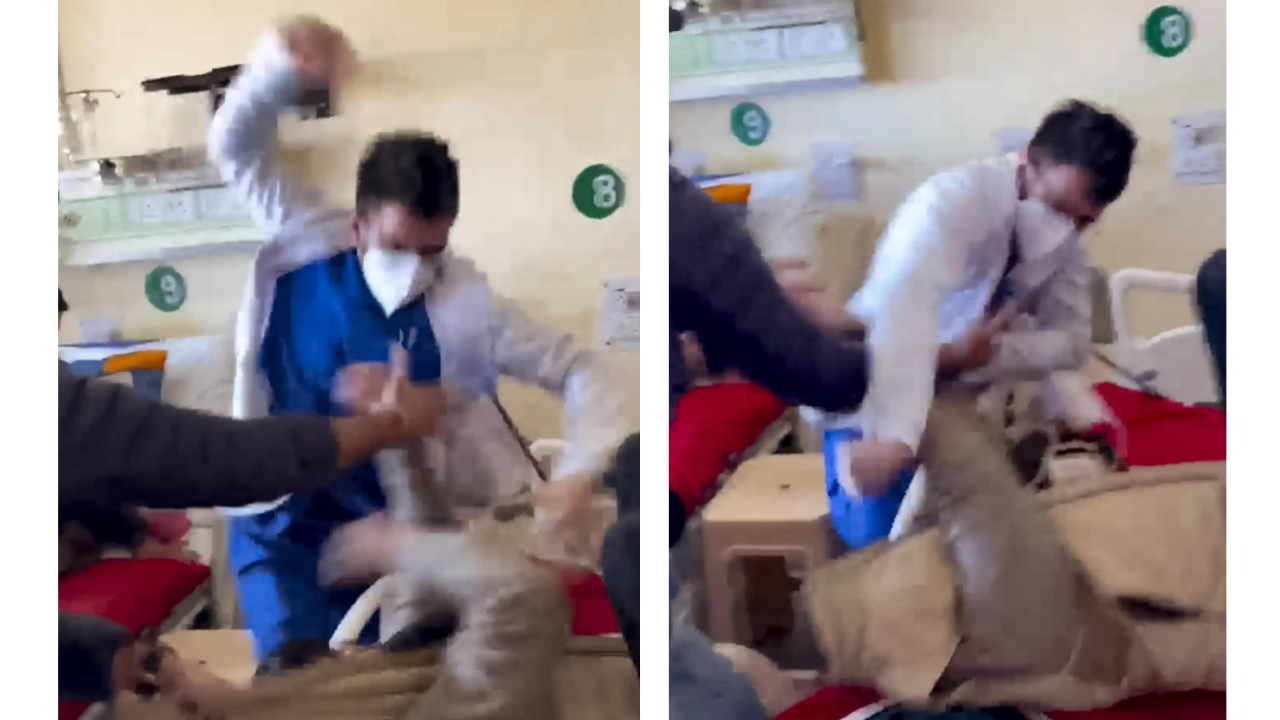
A shocking incident of physical assault by a doctor on a patient has rocked Indira Gandhi Medical College (IGMC) in Shimla, Himachal Pradesh. The event, triggered by a verbal altercation over the use of the word "tu," has led to the immediate suspension of the doctor involved and sparked widespread outrage[1].
The Incident Unfolds in Shimla Hospital
On Monday, a junior resident doctor named Raghav Narula, a contractual employee from Paonta Sahib in Sirmour, allegedly assaulted patient Arjun Singh at IGMC. The confrontation reportedly began when the patient used the informal pronoun "tu," which the doctor took offense to, escalating into a physical fight. A video captured by a bystander in the ward shows the doctor throwing multiple punches at Singh, who was lying on the hospital bed. Singh resisted by kicking, while two others attempted to intervene and restrain them[1].
Arjun Singh, a resident of Kupvi in Shimla, sustained a nose injury from the assault. The video quickly went viral on social media, prompting relatives of the victim to protest outside the hospital. They demanded that the doctor be handed over to them, highlighting the severity of the breach of trust in a medical setting[1].
Swift Action: Doctor Suspended Pending Inquiry
Hospital authorities responded promptly. Medical Superintendent Dr. Rahul Rao announced the formation of a probe committee headed by the head of the Chest and TB department, including the Deputy Medical Superintendent and Nursing Superintendent. Following directions from Himachal Pradesh Chief Minister Sukhvinder Singh Sukhu, Dr. Raghav Narula was suspended immediately, with his services withdrawn pending the inquiry[1].
Health Minister Dr. (Col) Dhani Ram Shandil confirmed that he directed the Secretary (Health), Principal, and MS of IGMC to investigate. He emphasized that the doctor's behavior is unfit for medical services and could lead to termination based on inquiry findings. The government has also pledged measures to prevent such recurrences[1].
The doctor, however, denied the allegations, claiming that the patient misbehaved first, leading to the scuffle[1]. A police complaint has been filed by the victim's family, adding a legal dimension to the hospital's internal probe[1].
Broader Context: Rising Medical Malpractice in India
This Shimla incident is not an isolated case but part of a disturbing national trend. Research indicates up to 5.2 million medical malpractice cases occur annually in India, reflecting a 110% increase in frequency and a staggering 400% surge in litigation[2][3][6]. These statistics underscore systemic issues in healthcare, where failures to meet standards of care result in harm to patients[3].
Medical negligence, defined as a healthcare provider's failure to deliver the acceptable standard of care, has escalated patient awareness and demands for accountability. Only 46% of providers comply with ethical guidelines, exacerbating the problem[2]. Surgical errors account for 80% of medical error deaths, while 70% of emergency fatalities stem from mismanagement[2]. States like Punjab (24%), West Bengal (17%), Maharashtra (16%), and Tamil Nadu (11%) report the highest rates[2].
Legal Framework and Challenges
India's legal system addresses malpractice through the Bharatiya Nyaya Sanhita (BNS), 2023, with Section 106 covering death due to rash or negligent acts (up to five years' imprisonment) and Section 121 for non-fatal injuries[6]. The Supreme Court's *Jacob Mathew v. State of Punjab* (2005) ruling requires proof of gross negligence for criminal liability, protecting against frivolous cases[6].
Under National Medical Commission Regulation 38, complaints must be filed with State Medical Councils within two years. However, challenges persist: accessing medical records is difficult, systemic delays prolong resolutions, and proof burdens are onerous[2]. A centralized data collection on negligence cases is under discussion, as highlighted in a 2025 Lok Sabha query seeking decade-long statistics and conviction rates[4].
Impact on Healthcare and Patients
Nearly 5 million Indians die annually from medical negligence, straining hospitals financially and leading to defensive medicine practices that raise costs[5]. Cases like Rajesh Kumar's, where a wrong diagnosis resulted in a INR 1.5 crore payout, illustrate how litigation burdens institutions, causing staff cuts and delayed upgrades[5].
Emerging telemedicine, legalized in 2020 and growing at 21.2% CAGR through 2030, introduces new risks due to lack of physical exams[5][7]. Pilots like Kerala's dedicated health courts have reduced backlogs by 40%, offering models for faster justice[6].
Preventing Future Assaults and Negligence
The Shimla assault highlights the need for de-escalation training, especially in high-stress environments like emergency wards. Hospitals must enforce zero-tolerance policies for violence, alongside ethical training to uphold patient dignity. Broader reforms include empowering the National Medical Commission for time-bound probes, license revocations, and specialized courts[6].
Enhanced informed consent, team coordination, and risk mitigation strategies can reduce incidents. Providers should prioritize communication to avoid tragedies from misunderstandings, like the "tu" dispute[2]. Patients are advised to gather evidence, consult experts, and file complaints promptly[2].
Lessons from Shimla for National Healthcare
The suspension of Dr. Raghav Narula sends a strong message: violence has no place in healing. As inquiries proceed, this case could catalyze stricter oversight at IGMC and beyond. With 5.2 million annual cases, India must invest in patient safety to rebuild trust[3].
Government directives for non-recurrence are promising, but sustained action—training, protocols, and accountability—is essential[1]. Victims like Arjun Singh deserve justice, while doctors must adhere to their oath.
Buy Now: Protect Your Health with Reliable Medical Tools
In light of rising concerns over medical negligence, equip yourself or loved ones with trusted health monitoring devices. Buy Now this essential health kit to stay proactive about your well-being.
Conclusion: Toward Safer Hospitals
The "tu" assault in Shimla exemplifies how minor disputes can escalate disastrously without professionalism. Coupled with national malpractice stats, it demands urgent reforms for ethical, safe care[1][2][3]. By learning from this, India can foster a healthcare system where patients are protected and doctors upheld.
(Word count: 912)


Comments
Post a Comment